
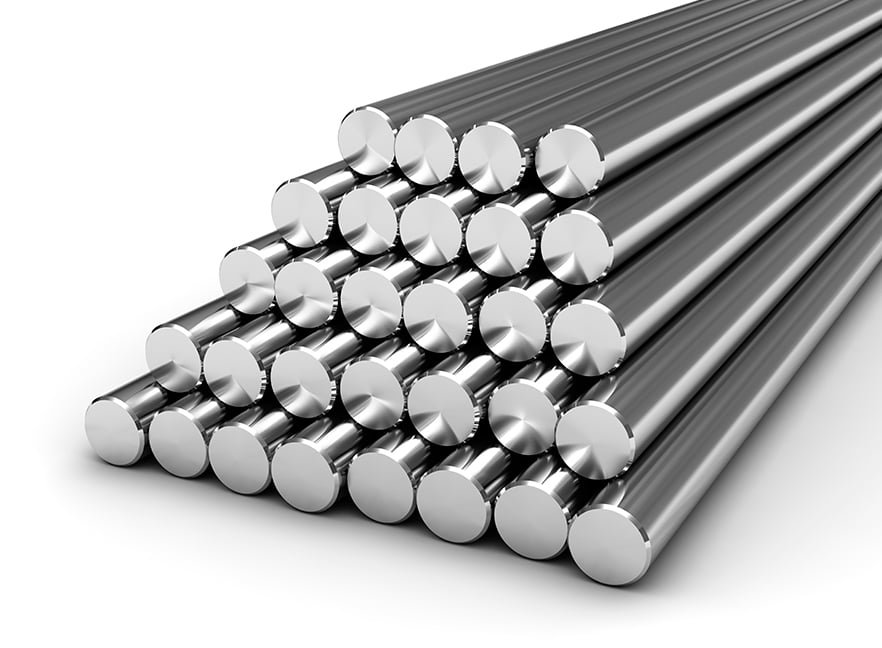
316L steel is austenitic with Cr-Ni-Mo content, it is used for its high resistance to corrosion, 316L stainless steel is ideal for applications in highly corrosive marine and chemical environments, it is a non-magnetic steel in an annealed state, with Changes in temperature present a lower possibility of carbide precipitation, and good forgeability and weldability properties. Due to the properties of AISI 316 steel, it is used in various industries, from chemical and food to medical and aeronautics.
AISI 316 steel, an austenitic Cr-Ni-Mo 316L stainless steel, is distinguished by its exceptional corrosion resistance, especially in harsh marine and chemical environments, the chemical composition is in accordance with ASTM A276/A276M-17, reveals controlled levels of elements such as carbon less than 0.03%, chromium 16-18%, nickel 10.0-14.0% and molybdenum 2.0-3.0%, in annealed condition, it is not magnetic.
Highlighting its lower sensitivity to carbide precipitation, this 316 steel reduces the risk of intergranular cracking, its resistance to creep at high temperatures exceeds that of 304 stainless steel (AISI 304 vs 316), and offers good forgeability and weldability characteristics, thermal conductivity is 50% that of low alloy or tool grade carbon steels.
In terms of mechanical properties, it is supplied in annealed condition with maximum hardness of 262 HB (~26 HRC), at room temperature, it shows tensile strength of 485 MPa (70,000 Lb/in2), a yield strength of 170 MPa (25,000 Lb/in2), elongation of 30%, area reduction of 40%, these values are reference in the annealed state, in accordance with ASTM A276/A276M-17 standard.
In terms of applications, 316L stainless steel is used in the manufacturing of components for chemical, food, pharmaceutical, medical, oil & gas, aeronautics, and other sectors that demand maximum corrosion resistance, ideal for mechanical components exposed to stress. and welding processes, can be considered as a substitute for AISI 304, although with a decrease in corrosion resistance and greater sensitivity to intergranular corrosion.