
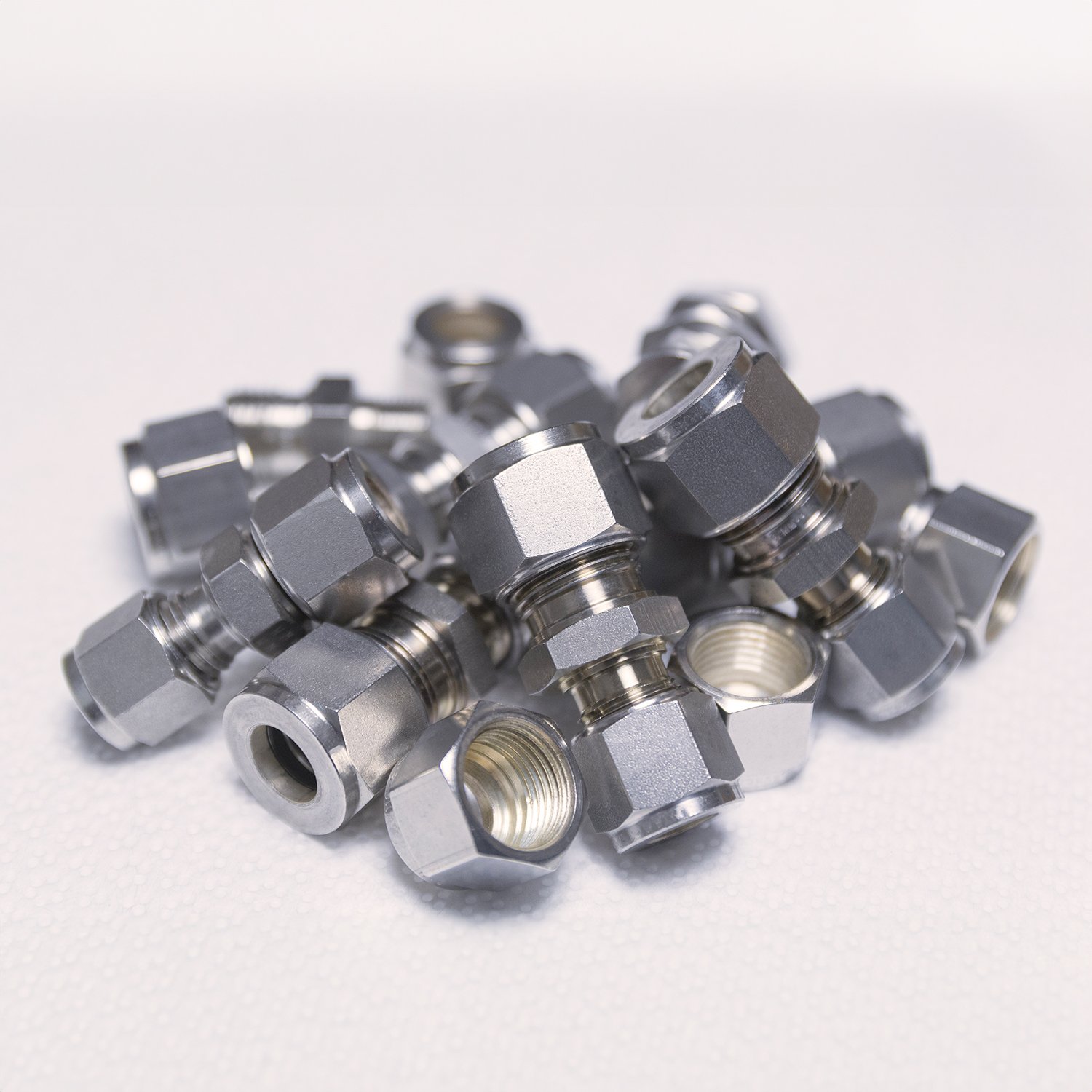
SAE 12L14, high machinability steel, used for its balanced chemical composition, including elements such as sulfur, manganese and lead, presents notable mechanical properties, is supplied in cold drawn conditions, with an estimated hardness of 163 HBN, this steel is used for its application in the manufacture of automotive parts, studs, nuts and screws, where machinability and resistance are crucial.
AISI 12L14 Recognized as the steel with good machinability, it is distinguished by its chemical composition that includes sulfur, manganese and lead, in cold drawn supply conditions, with an estimated hardness of 163 HBN, this steel presents remarkable mechanical properties, with tensile strength of 540 MPa and elastic limit of 410 MPa, accompanied by a 10% elongation in 2.0″ and a 35% reduction in area.
Characterized by its application in the manufacture of automotive parts, studs, nuts and bolts, 12L14 is used for its exceptional machinability, reaching 60% more than 1215 steel according to SAE J414a, this machinability is achieved through the combination of sulfur, manganese and lead, allowing deeper cuts and high speeds, significantly improving the surface finish of the manufactured parts.
Although it has low hot and cold forgeability, and lower weldability compared to other carbon steels, 12L14 is commercially cold drawn, offering a smooth finish and dimensional uniformity, due to its low percentage of carbon (0.10%), not It responds to hardening by transformation to martensite, but can be subjected to thermochemical treatments such as carbonitriding or cementation for surface hardening.
In the field of applications, AISI 12L14 is ideal for environments where the manufacturing volumes of machined parts are high, being especially efficient in automatic lathes. It can replace 1018 AISI steel, as long as it is not subjected to welding processes. In addition, it can be an alternative to 1045 AISI steel in applications with lower mechanical stress, where total hardening and welding processes are not required.
Regarding heat treatment, carbonitriding or carburizing is suggested to give a hard surface that is resistant to moderate wear, with quenching in oil (tempering), since the carbonitriding or carburizing temperature provides maximum hardness, and although tempering is not common , can reduce brittleness at 200°C for at least 1 hour.