
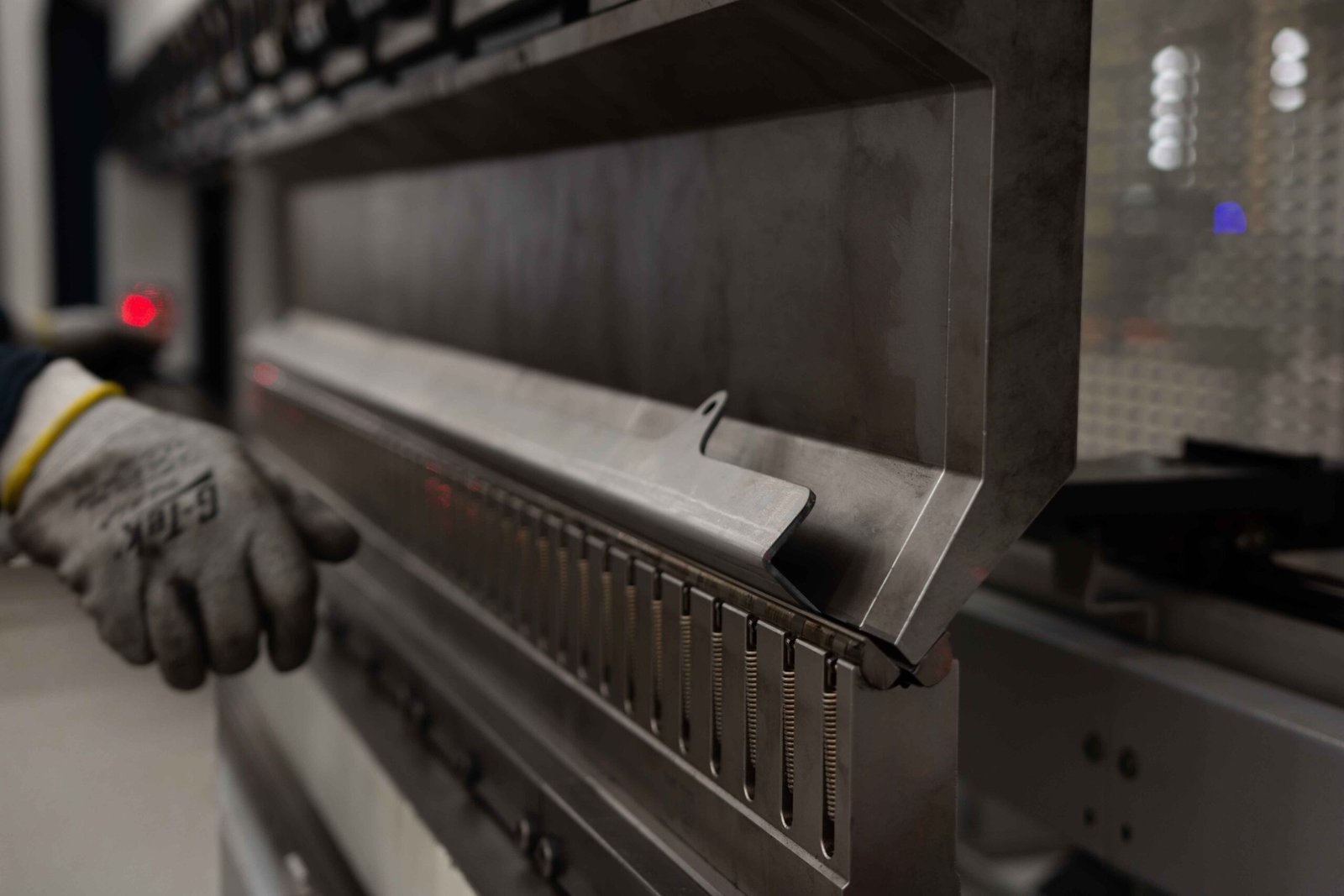
We have cutting, bending and machining processes for steel, offering a series of advantages that range from precision and efficiency in production, to the ability to adapt to various needs and design specifications, providing versatility and safety in each of our processes. , thus meeting the most demanding quality standards in the industry.
Set of processes focused on the preparation of metallic materials prior to the assembly or finishing processes, where it generally begins after the receipt of raw materials (plates and sheets), which can go through different processes to reach the product. wanted.
Process by which it works by concentrating a beam of light (laser energy) in a very small point, generating the precise and detailed cutting of metal components, with exceptional quality in its finishes, providing speed and slenderness in our process.
Process by which we generate the machining of metal components with the highest precision and quality, through material roughing, whether milling, drilling, turning or grinding. Our state-of-the-art equipment works from precise instructions provided by a computer program, achieving repeatability and consistency in each piece.
Process by which we generate the precise and efficient formation of a metallic component, through the bending of a plate or sheet with millimeter accuracy in the shape or angle required. We have the highest technology equipment that allows us to bend steels that have great thickness and resistance.
These processes are used in the manufacturing industry to cut, shape and transform steel according to the specifications required in the manufacture of each product.
• Versatility: These processes allow steel to be worked into different shapes and sizes, adapting to the design and manufacturing needs.
• Precision: Modern cutting and machining techniques allow very precise measurements and shapes to be obtained, which is essential in the manufacture of parts or components that require tight tolerances.
• Efficiency: The automated cutting and bending process can be highly efficient in terms of production time and costs. Modern machines can perform these tasks quickly and with minimal human intervention.
• Finish quality: Machining can provide very smooth surfaces and high-quality finishes, which is essential in applications where aesthetics or functionality are critical.
• Adaptability to different types of steel: These processes can be applied to a wide range of types of steel, allowing work with different mechanical properties and specific characteristics depending on the needs of the project.
• Waste reduction: With precision in cutting and bending, material waste is minimized, which contributes to more efficient management of resources.
• Automation and control: Automating these processes allows for greater control over the quality and consistency of the parts produced, reducing the possibility of human error.
• Custom manufacturing: Customized work can be carried out and adapted to the specific needs of the client or design, resulting in more suitable and functional final products.


Reviews
There are no reviews yet.